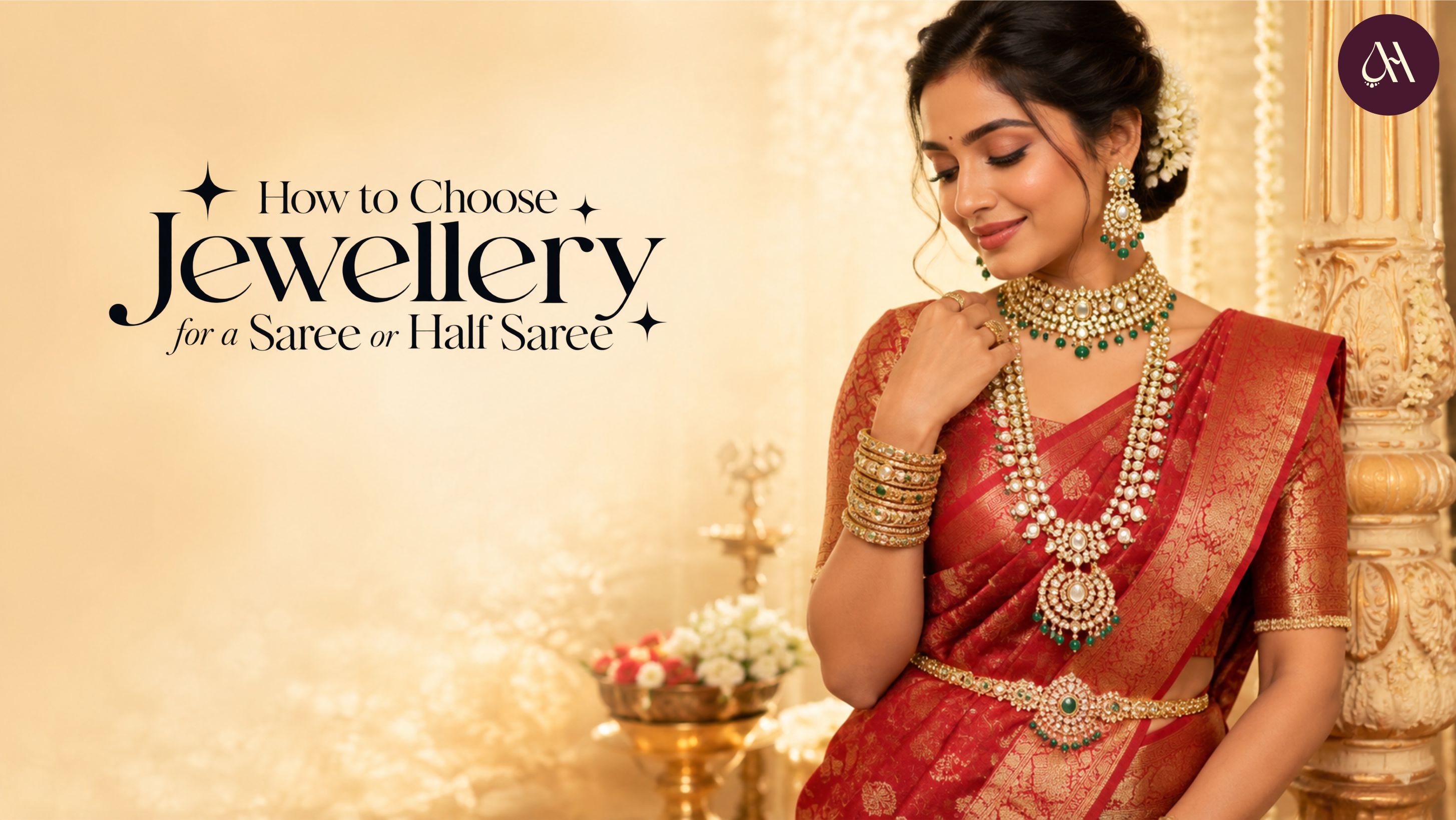
Choosing jewellery for a saree often raises more questions than expected. Should you wear a choker or a long necklace? Can both be layered together? Should your jewellery match the saree or provide a contrasting colour? And do you really need matching earrings, bangles and a waist chain?
The right answer depends on your outfit, neckline, occasion and personal comfort. This guide will help you create a balanced jewellery combination for weddings, engagements, festivals and other traditional celebrations.
Start with the saree and the occasion
Before selecting jewellery, consider three things:
Is the saree simple or heavily embellished?
Is the event an intimate function or a grand wedding?
Do you want an elegant, traditional or statement look?
A richly embroidered saree already has plenty of visual detail. It usually looks best with one prominent jewellery element, such as a traditional necklace set or long haram.
A simpler saree gives you more freedom to layer necklaces, create a fuller bangle stack or add a statement waist chain.
For daytime engagements and smaller functions, lighter Kundan or delicate pendant sets can feel elegant without becoming uncomfortable. For weddings and festive evenings, Pachi Kundan, long harams and statement Hasdi necklace sets can create a more regal appearance.
Should you wear a short or long necklace?
Your saree blouse neckline provides the first clue.
Choose a short necklace or choker when:
Your blouse has a wide, deep or sweetheart neckline.
You want the necklace to frame your face.
Your saree or blouse already has heavy embroidery.
You want a clean, modern traditional look.
A Kundan choker or Hasdi necklace can become the main focus while keeping the rest of the styling controlled.
Choose a long necklace or haram when:
Your blouse has a higher or more covered neckline.
You want to create an elongated silhouette.
Your saree is relatively simple.
You are dressing for a wedding or larger celebration.
Long harams, malas and layered necklaces work particularly well with silk sarees, half sarees and traditional bridal or wedding-guest outfits.
Antic Hub currently features styles such as the Heritage Swarovski Kundan Long Haram Necklace Set and statement long Kundan necklace designs for shoppers looking for this traditional layered effect.
Can you wear a choker and long haram together?
Yes. A short necklace combined with a long haram is one of the most popular traditional jewellery combinations but the two pieces must look connected.
Use these rules:
1. Leave visible space between the necklaces.
The choker should sit close to the neck, while the haram should fall clearly below it. If both necklaces finish at nearly the same level, the arrangement can appear crowded.
2. Repeat one common detail.
The two necklaces do not have to be identical. They can share a gold tone, Kundan work, pearl detailing or one common stone colour.
3. Let only one piece dominate.
If your choker is extremely detailed, choose a more graceful long necklace. If the haram is large and elaborate, keep the short necklace comparatively restrained.
4. Balance the earrings.
When two necklaces are layered, medium-sized earrings are often enough. Very large earrings combined with two heavy necklaces can make the overall look feel uncomfortable and visually busy.
Should jewellery match or contrast with the saree?
Matching is not the only option. A carefully chosen contrasting colour can make the entire outfit more memorable.
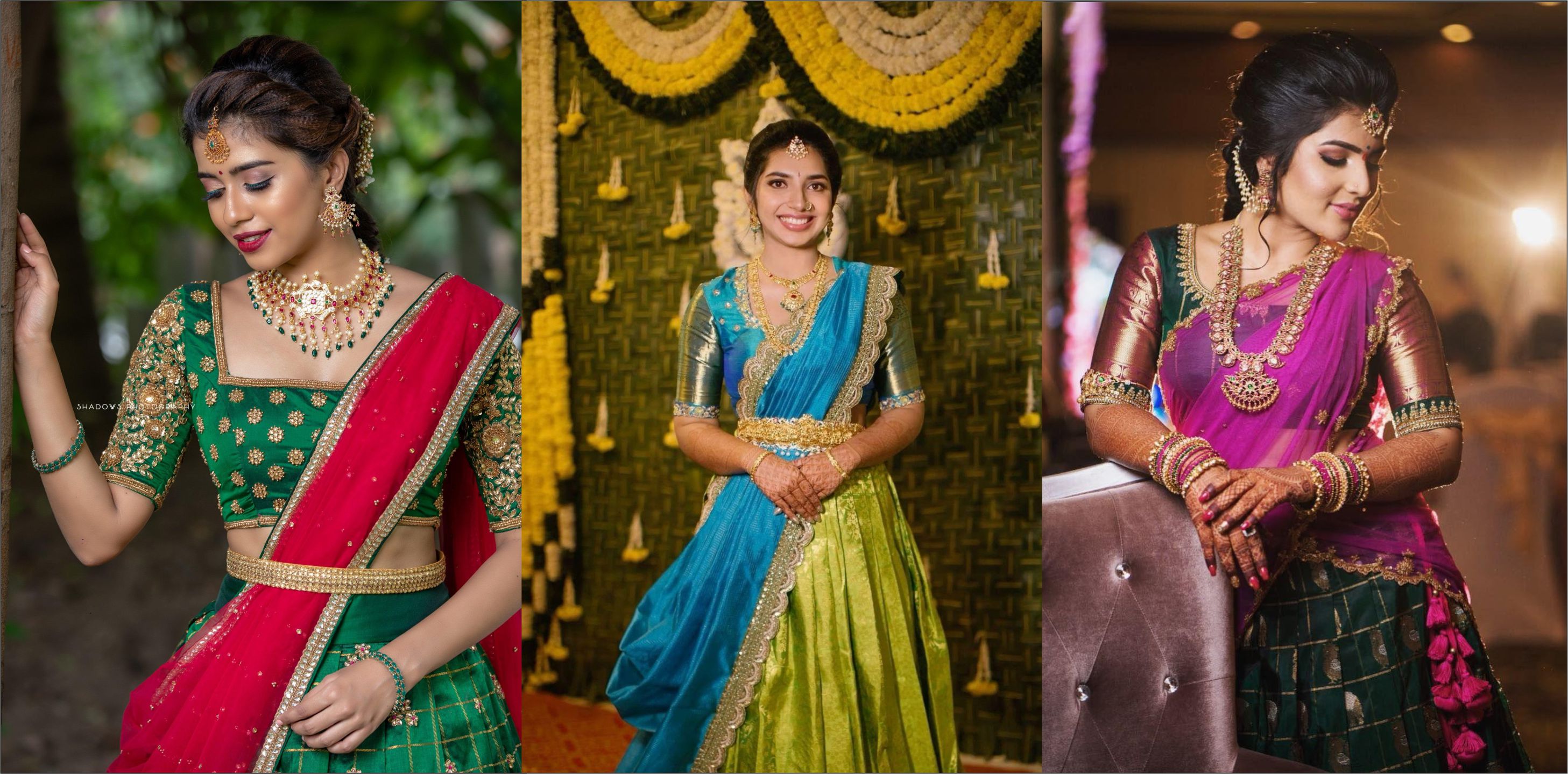
Red saree or half saree
Imitation-gold jewellery, Pachi Kundan and traditional gold-finish necklace sets are reliable choices for red outfits. Green stones or pearls can introduce contrast without taking away from the richness of the red.
For a simpler engagement look, select one elegant necklace with matching earrings. For a wedding, add bangles and a coordinated waist chain.
Pink saree
Emerald green stones look particularly striking with pink. A green-accented short necklace can be combined with a pearl or traditional gold-tone long haram.
Plain gold bangles placed between green or stone-studded kadas can complete the combination.
Green saree
Kundan, pearl and gold-finish jewellery all work beautifully with green. Ruby or deep pink accents can provide contrast, while clear stones create a softer look.
Multicoloured or heavily embroidered saree
Choose one colour from the saree and repeat it in the jewellery. Avoid trying to match every colour in the fabric. A single repeated tone creates a more polished result.
Black, white or neutral saree
These colours allow greater experimentation. Oxidised jewellery can create a bold ethnic look, while gold-finish or Kundan jewellery provides a more festive appearance.
How to build an elegant bangle stack
A well-planned bangle stack looks coordinated without needing every bangle to come from the same set.
Try this simple formula:
Begin with one statement kada on each side.
Add slim plain bangles in the centre.
Repeat one colour from your necklace or saree.
Keep both wrists reasonably balanced.
For example, a green Kundan necklace can be paired with one green-stone kada and several plain gold-tone bangles. Pachi Kundan bangles are another suitable choice for wedding sarees and half sarees.
If you expect to wear the jewellery for several hours, check the bangle size and weight before ordering. Comfort matters just as much as appearance.
Do you need a waist chain?
A waist chain also known as a hip chain, kamarbandh or vaddanam is optional, but it can complete a traditional saree or half-saree look.
Choose a waist chain when:
The saree drape leaves the waist visible.
You want to define the silhouette.
You are attending a wedding, engagement or traditional ceremony.
The blouse and necklace styling can support another decorative element.
If your necklaces and saree are already elaborate, select a lightweight waist chain with a simple floral or peacock-inspired centre. For a quieter outfit, a more detailed waist chain can become the statement accessory.
Always check whether the chain is adjustable and comfortable while sitting, walking and dancing.
How to choose reliable imitation jewellery online
Beautiful product photographs are important, but they are not enough. Before purchasing jewellery online, check:
Product dimensions and necklace length.
Materials, finish and plating information.
Whether earrings are included.
Bangle size and adjustability.
Product weight, especially for long functions.
Close-up photographs of stones and clasps.
Delivery estimates.
Return or exchange conditions.
Customer-support information.
If you are buying for a fixed wedding date, order early enough to allow time for delivery and a complete outfit trial.
How to protect artificial jewellery from tarnishing
The life of artificial jewellery depends on its finish, usage and care. Even good jewellery can lose its appearance if regularly exposed to moisture and chemicals.
To help preserve it:
Apply perfume, moisturiser and hairspray before wearing jewellery.
Avoid direct exposure to water and excessive sweat.
Wipe each piece gently after use.
Store pieces separately to prevent scratches.
Keep jewellery in a dry box or pouch.
Do not pile necklaces together, as chains and stones may become tangled.
Statements such as “waterproof” or “anti-tarnish” should be evaluated using the specific product description. Do not assume that every artificial jewellery piece can be worn in the shower or stored in humid conditions.
Four easy jewellery combinations
Simple engagement look
Matching earrings.
Slim bangles.
No waist chain, or a very delicate one.
Traditional half-saree look
Coordinated long haram.
Matching earrings.
Statement kadas with plain bangles.
Lightweight waist chain.
Elegant wedding-guest saree look
One statement long necklace.
Medium-sized earrings.
A balanced bangle stack.
One ring or small additional accessory.
Garba or festive look
Statement earrings.
Oxidised bangles or kada.
Comfortable pieces that allow easy movement.
Find your traditional jewellery at Antic Hub
Antic Hub offers artificial jewellery selected for Indian weddings, festivals and everyday celebrations. The collection includes Kundan necklace sets, Pachi Kundan jewellery, oxidised Hasdi sets, long harams, earrings, pendants and traditional bangles.
Whether you are styling a red half saree for an engagement, layering necklaces for a wedding or looking for an oxidised set for a festive outfit, begin with one statement piece and build the rest of your jewellery around it.